Carbon Fiber Straps vs Steel I-Beams: Comparing Possible Approaches for a Bowing Basement Wall
Need help with your own home?
Tell us your concern. We'll check local contractor availability.
No referral fee · No obligation to hire
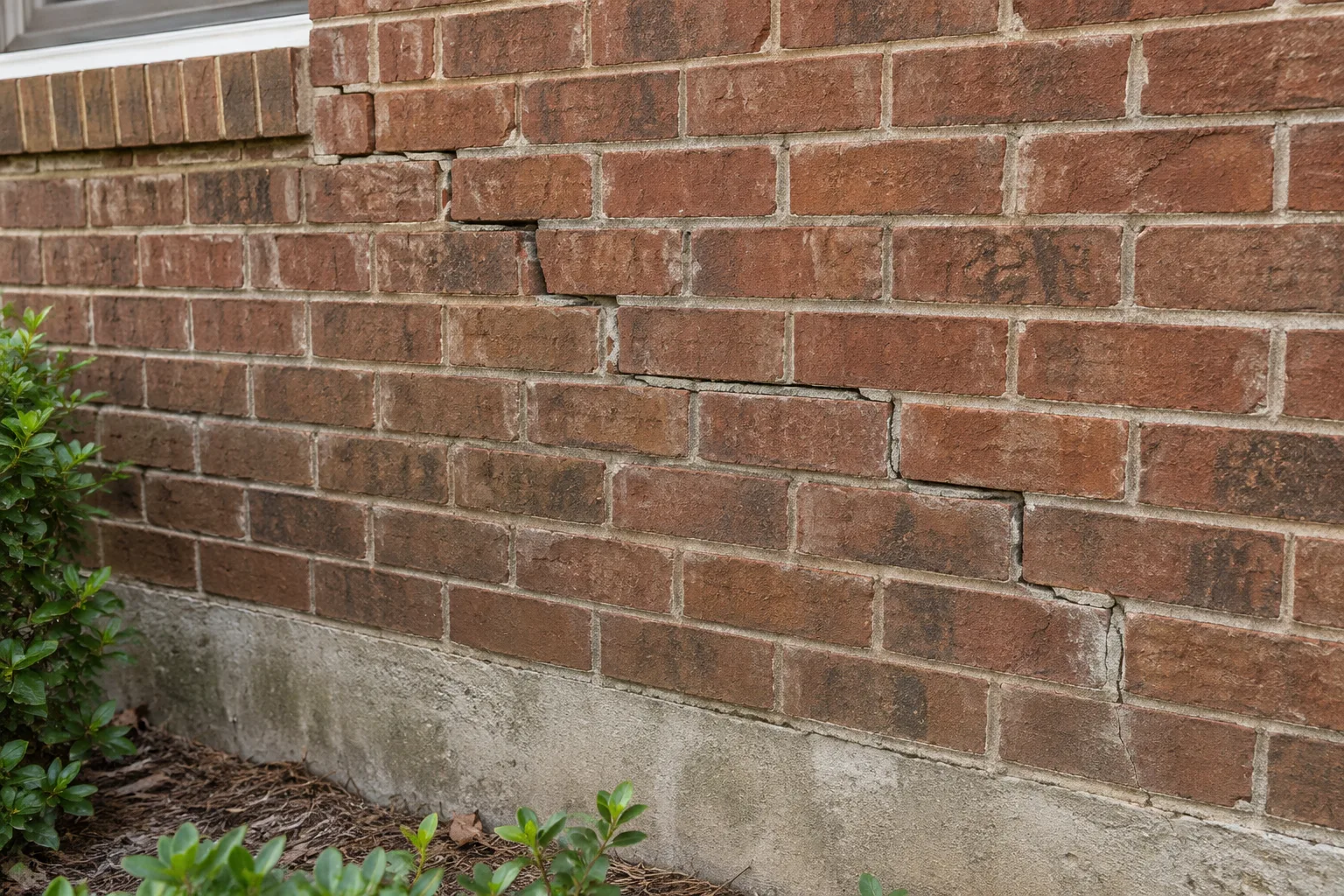
What actually causes a basement wall to bow inward in Marietta?
Basement-wall movement can relate to lateral soil or water pressure, drainage, wall construction, fill, grading, or other conditions. The USDA Official Series Description for Cecil classifies mapped Cecil soils as low shrink-swell; that regional map is not a diagnosis. Ask for wall-deflection measurements and a site-specific explanation.
Cecil soil information and regional rainfall can provide context, but fill, drainage, grading, wall construction, and foundation details vary by lot. Saturated soil or hydrostatic pressure may contribute to wall movement; request measurements and an observed water path before accepting a cause.
Wall construction, loads, drainage and measured condition matter more than a ZIP code or construction era. This guide does not establish a local peak-risk group or a universal deflection threshold for structural capacity.
Wall stabilization and waterproofing address different questions. Ask whether drainage, grading, crack repair, or structural support fits the observed condition. See basement waterproofing and spring rain and hydrostatic pressure for related questions.
What are carbon fiber straps and how do they stabilize a bowing wall?
Carbon-fiber straps are one possible stabilization method for a measured wall condition. Suitability depends on wall type, deflection, cracking, loads, access, drainage, preparation and system design; straps do not automatically stop movement or correct its cause.
Carbon-fiber strap systems differ in profile, capacity and installation requirements. Ask how spacing, wall height, block type, measured deflection, preparation and design support the proposed scope; do not rely on a generic strength or disruption claim.
A provider may discuss an interior installation where the selected system permits it, but access, preparation and other construction can change disruption. Published prices are rough budgeting context only, not verified Cobb County price data or a quote.
Carbon fiber may be discussed for a measured condition within the system's limits; more extensive movement may require another approach. Ask for limitations in writing. See the bowing wall repair page.
- Possible strap-based stabilization approach, subject to wall type and system requirements
- Ask whether installation is from inside, outside or both and what preparation is required
- Confirm spacing, wall height, block or concrete condition and measured deflection
- Do not infer a universal deflection threshold or result from a product name
- Ask what the system cannot correct, including water or underlying movement causes
How do steel I-beam braces compare to carbon fiber straps?
Steel I-beams are another possible bracing approach. Their size, attachment, spacing, ability to adjust and suitability depend on wall condition, floor and joist connections, loads, access and design; they are not selected by a generic threshold.
A provider may compare steel braces with carbon fiber, anchors or other systems based on measurements and design. Any claim about retightening, straightening or future movement is system- and contract-specific, not guaranteed.
Steel braces can affect usable space and finishing plans, but dimensions and layout depend on the selected system and property. Ask for drawings, clearances, attachment details and alternatives.
Structural stabilization and drainage or water control address different questions. Ask how the recommendation relates to measured wall condition and observed water paths.
- Possible bracing approach with dimensions and attachments that vary by system
- Ask about basement clearances, floor and joist connections, and finish implications
- Retightening or movement correction may not be available and is not guaranteed
- Compare steel braces with carbon fiber, anchors, drainage and monitoring using site evidence
- Request written design limits, exclusions and warranty terms
When might wall anchors be discussed for a bowing wall?
Wall anchors are another possible stabilization approach that may require exterior access, interior plates and site-specific soil or access conditions. Whether they can adjust or straighten a wall depends on the design, measured movement, installation and written terms; no system is automatically the only or best option.
Exterior access may affect landscaping, patios, driveways or lot-line constraints. Ask what access and restoration the proposed scope requires.
Wall anchors may be discussed when measured deflection, access, soil and design support them. Ask what evidence, installation criterion, alternatives and limitations support the method; code references do not replace a site-specific assessment.
See the horizontal foundation cracks page for questions about wall movement and the bowing basement wall repair cost page for budgeting context.
- May require exterior access and site-specific restoration
- Adjustment or straightening depends on design and written terms, not a universal claim
- Ask about rod or plate locations, soil evidence, installation criteria and alternatives
- Compare anchors with interior braces, carbon fiber, drainage and monitoring
- Do not infer a method from a generic deflection threshold
How do I choose between carbon fiber, steel beams, and wall anchors for my Cobb County home?
Compare the wall condition, measurements, loads, drainage, access and each system's design requirements. Deflection alone does not select carbon fiber, beams or anchors. Ask what evidence supports the proposal and how its limitations, disruption and terms compare with alternatives.
Compare the wall condition, measurements, loads, drainage, access and each system's design requirements. Deflection alone does not select carbon fiber, beams or anchors. Ask what evidence supports the proposal and how its limitations, disruption and terms compare with alternatives.
Do not use a generic threshold or product claim as a substitute for design questions. Request wall measurements, drainage observations, access constraints, alternatives and written system limitations.
An on-site measurement of wall deflection can help compare methods. Use the foundation inspection page to frame questions; any contractor availability, assessment fee, scope and schedule are confirmed directly.
What does bowing wall repair cost in Marietta and East Cobb?
Published $1,750–$6,000 examples are broad planning context, not verified Cobb County prices or a contractor quote. The range does not establish a method, quantity, number of walls, or included components for a particular property. Request an itemized proposal based on the actual conditions and supported design.
Ask the proposal to identify the design basis, quantities, access requirements, included and excluded work, and any separate scopes. A planning range cannot establish whether crack treatment is appropriate or the sequence of any work.
If drainage work is proposed, ask what water path was observed and how the scope relates to the wall. Published waterproofing ranges are rough budgeting context only, not verified Cobb County price data or a quote. See basement waterproofing costs in Cobb County for planning questions.
For a detailed breakdown by method and severity, see the bowing basement wall repair cost guide. The foundation cost estimator can provide rough planning context before an assessment.
What construction-era and site observations may matter for wall movement?
Homes from different construction eras can have different wall, drainage, grading, and backfill details, but age or neighborhood does not diagnose wall movement. Ask for site observations and measurements before attributing a condition to soil or construction era.
Homes from different construction eras can have different wall, drainage, grading and backfill details, but age, ZIP code and neighborhood do not diagnose wall movement.
Saprolite and mapped Cecil information are regional context; drainage, fill and wall construction vary by lot. Ask for site-specific evidence rather than assuming a countywide profile.
A contractor may review soil and drainage observations during an assessment if available, but this service does not provide a diagnosis. Confirm all assessment terms directly.
How does the referral model work and what does the inspection cost?
We do not perform inspections, repairs, or installations. If a suitable contractor is available, this disclosed referral service may introduce you to that contractor. Availability and credentials are not guaranteed; verify identity, license, insurance, assessment fee, scope, schedule, payment, and warranty terms directly.
We do not vet or guarantee a contractor’s work. If you request an introduction, ask the contractor for licensing and insurance information and verify it independently. Any assessment or written estimate comes from the contractor under terms confirmed directly.
We are not a contractor. The referral request has no fee from this service. If an introduction is arranged under a referral agreement, the contractor may compensate us; that arrangement does not set the contractor’s assessment or repair terms. Confirm those terms directly.
To request an introduction, visit the foundation inspection page or call (678) 329-9460. There is no obligation to hire. Ask for a written scope and compare alternatives before authorizing work.
Frequently asked questions
Can carbon fiber straps actually stop a basement wall from getting worse?
Carbon-fiber straps may help stabilize some measured wall conditions, but no result is guaranteed from a general description. Ask about wall type, deflection, preparation, spacing, drainage, alternatives, and warranty terms before authorizing work.
Is it possible to straighten a bowing wall back to plumb, or just hold it in place?
Whether a wall can be straightened or only stabilized depends on the measured condition, selected system, design and installation terms. Some anchors may be adjustable, while straps or braces may primarily stabilize; ask about realistic targets and limitations.
Will I need to dig up my yard to fix a bowing basement wall?
Exterior access depends on the selected system and property. Carbon-fiber straps or some interior braces may be installed from inside, while anchors or exterior drainage may require yard access. Ask what disruption and restoration the written scope includes.
Does fixing the bowing wall also fix the water coming in?
No. Wall stabilization and waterproofing address different conditions. Ask whether an interior drainage, grading, or other water-control scope should accompany the structural work; published ranges are rough budgeting context only.
How long does a carbon fiber strap installation take in a Marietta home?
Timing varies with wall length, preparation, system, access, and curing requirements. Ask the contractor to state expected duration and contingencies in writing. Availability and schedule are not guaranteed by this service.
Does Marietta Foundation Repair perform the bowing wall repair itself?
No. Marietta Foundation Repair is a disclosed referral service, not a contractor. If an introduction is available, a contractor may assess the wall. Confirm fee, scope, schedule, credentials, and any warranty directly. The referral request has no fee from this service.