Why Foundations Crack in Cobb County's Red Clay
Need help with your own home?
Tell us your concern. We'll check local contractor availability.
No referral fee · No obligation to hire
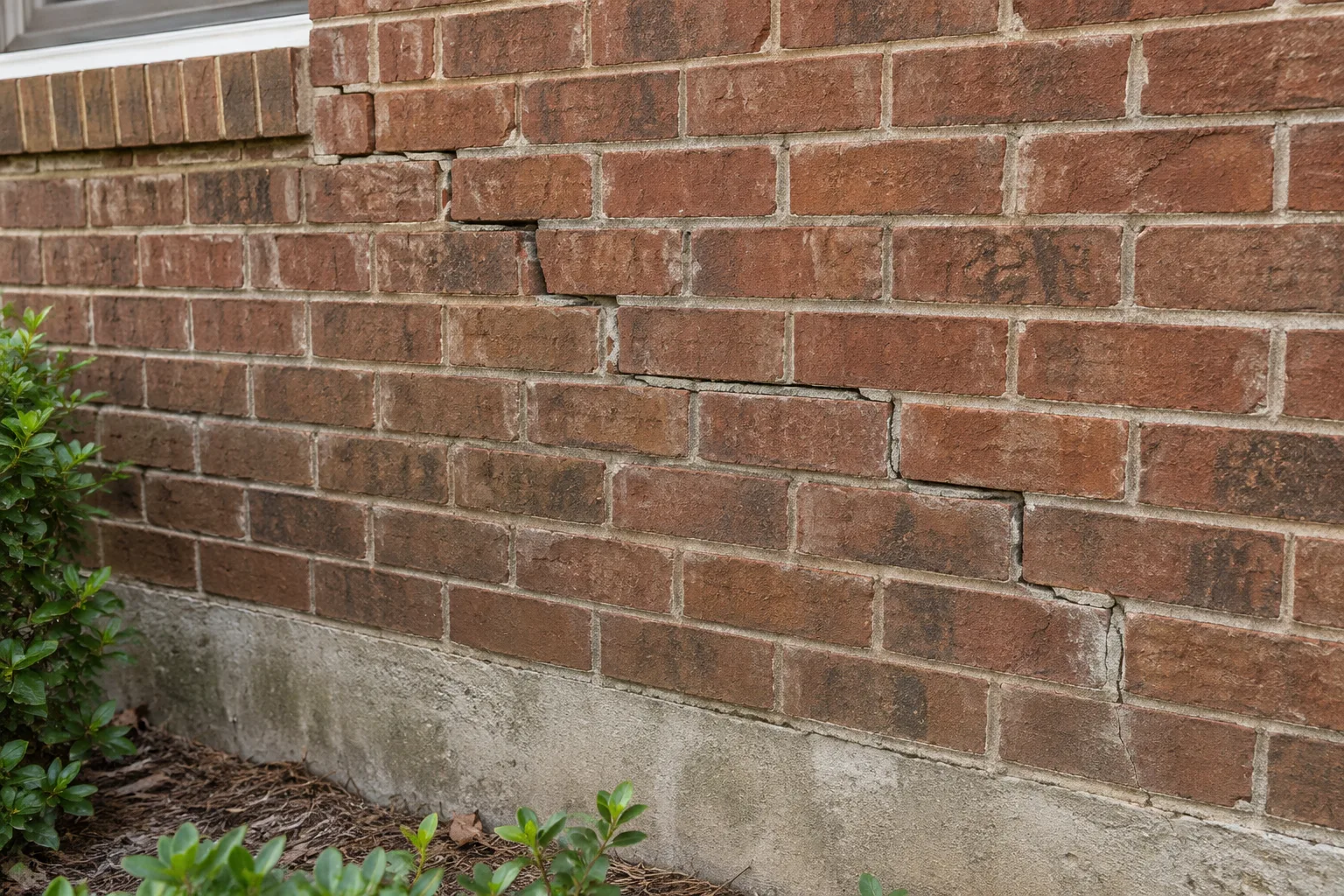
What conditions may contribute to foundation cracks in Cobb County?
Foundation cracking can result from differential settlement, moisture, drainage, fill, construction details, shrinkage, wall pressure, or other conditions. Mapped soil units offer regional context, but they do not establish what is beneath one home. Measurements and a professional assessment may help evaluate possible causes, but no guide can guarantee a cause remotely.
Cobb County includes mapped Piedmont soil units, but homes also differ in fill, grading, drainage, foundation type, and construction history. The USDA Official Series Description for Cecil classifies mapped Cecil soils as low shrink-swell. That regional map is not a diagnosis; fill, drainage, grading, foundation type, and settlement history vary by lot. The color of soil or a crack photograph cannot diagnose a property.
Wet and dry conditions can change soil volume and water pressure, but the amount and direction of movement vary by lot. A downspout, tree, fill pocket, plumbing leak, or uneven footing can create different conditions on the same street. Treat the cycle as a question to investigate, not a county-wide verdict.
Uneven support is one possible concern, but mapped clay does not universally lift or abandon foundations. Use the symptom guide to organize observations and the repair overview to prepare questions, not to diagnose the cause.
What is the wet-swell, dry-shrink cycle and when does it happen?
A wet-swell/dry-shrink cycle describes seasonal moisture changes in some soils. Rain, drainage, tree use, grading, and soil type affect how much movement occurs. A crack that changes seasonally can be active, but only dated observations and site measurements can establish that.
Metro Atlanta has wet and dry seasons, but timing and soil response vary by lot. Mapped Cecil information is regional context, not a diagnosis; drainage, fill, foundation type, and construction history also affect a property. Ask for site measurements before attributing a crack to seasonal soil movement.
Some soils respond to moisture changes, but the amount and effect depend on their properties and site conditions. A crack that opens or closes seasonally is worth documenting; that timing alone does not establish a soil mechanism or repair.
Seasonal extremes can make an existing symptom more visible, but two homes on the same street may behave differently. Record crack width, displacement, water entry, and related door or floor changes over time, then ask what the site evidence shows.
What is differential settlement, and what site conditions may contribute?
Differential settlement means one part of a foundation moves more than another. Uneven moisture, fill, footing conditions, drainage, construction, or loads can contribute. The resulting racking may appear as stair-step brick cracks, sticking doors, or sloping floors, but those signs require assessment rather than an automatic pier diagnosis.
Differential settlement describes one part of a foundation moving differently from another. Uneven moisture, fill, footing conditions, drainage, construction, or loads may contribute, but a visible crack does not by itself establish which condition is present.
One corner may stay wet near a downspout while another dries near a tree; fill or a footing transition can add another difference. These are examples of why drainage, foundation type, measurements, and site history matter more than a regional soil label.
Differential movement is one possible explanation for stair-step cracks, sticking doors, or sloping floors, but those observations do not identify deep movement or select piers. If a provider finds evidence of settlement, it may compare monitoring, drainage, crack treatment, leveling, support, or another scope and explain the limits of each.
Is the foundation risk different in East Cobb versus West Cobb?
Cobb County is not geologically uniform. Mapped Cecil and other Piedmont soils, saprolite, fill, grading, drainage, and foundation construction vary by lot, so regional labels cannot establish a cause. East and West Cobb may present different site questions, but a foundation assessment must use observations and measurements from the property.
Cobb County is not geologically uniform. East Cobb includes mapped Cecil and other soil units under varied 1990s subdivisions, while West Cobb includes clay, saprolite, fill, and steeper lots. These are regional patterns, not property diagnoses; the observed foundation, drainage, grading, and settlement history control the assessment.
West Cobb may include a mix of clay and weathered granite (saprolite), and sloped or lakeside lots can concentrate runoff. East Cobb also has varied fill, drainage, and foundation construction. A site professional should test or measure the conditions rather than infer bearing from a neighborhood or soil label.
The housing stock also varies: post-WWII slab-on-grade ranches, basement-and-crawlspace subdivisions, and newer post-tension slabs respond differently. Foundation type, drainage, fill, and site history matter, so an available contractor should assess the property rather than diagnose by neighborhood.
How might tree roots and drainage relate to foundation observations?
Tree roots, drainage, grading, gutters, plumbing, soil, and foundation details may be relevant on some properties, but none is a diagnosis by itself. A provider should distinguish observed conditions from assumptions and explain what evidence supports any proposed monitoring, water-management, or structural scope.
Trees and drainage can influence where movement appears, but neither is a diagnosis on its own. Roots may alter moisture near a footing; gutters, grading, and plumbing may concentrate water. Ask the contractor to distinguish observed conditions from assumptions and to explain what evidence supports the proposed method.
Drainage is one possible contributor among grading, gutters, downspouts, plumbing, roots, fill, and foundation details. A provider should trace the water path and distinguish observed conditions from assumptions; correcting a gutter or grade may help a documented pathway, but no ranking, price, or result can be inferred remotely.
Site drainage and grading requirements may be relevant to a property-specific review, but a code reference does not establish the cause or prescribe the sequence of work. A provider may discuss gutters, downspouts, regrading, drains, waterproofing, or structural work when evidence supports each; ask for separate scope, limits, and maintenance terms.
How should warning signs be interpreted when soil context is discussed?
Cracks, sticking openings, uneven floors, trim gaps and water entry may be relevant to an investigation, but do not map to one soil mechanism. Document changes and ask what measurements support the proposed explanation.
Cracks around openings may relate to movement, construction or material behavior. Their pattern alone does not identify the materials beneath a footing or the cause of distress.
Floor changes, trim gaps, sticking doors and water entry can have different explanations. Ask which observations support the proposed explanation and what further investigation may be needed.
Use the symptom guide to document concerns and the assessment guide to prepare questions. Neither a narrow crack nor a familiar pattern establishes safety or selects a repair.
- Stair-step cracks in brick or block - document location, width, displacement, and change; pattern alone does not identify the cause
- Doors and windows that stick or will not latch - record which openings changed and when, alongside moisture and floor observations
- Diagonal drywall cracks near openings - compare with framing, finish, moisture, and structural observations
- Sloping or bouncy floors - identify the foundation and floor system, then ask what supports, framing, slab, or finish conditions were measured
- Gaps at baseboards, trim, or crown molding - document changes without assigning a subsurface cause from appearance
- Basement or crawlspace seepage and bowing walls - trace the water path and assess wall or support conditions separately
Which repair approaches may fit documented foundation movement?
There is no single repair for a movement pattern. If measurements show deep footing settlement, a contractor may discuss helical or push-pier underpinning; if the concern is a crack, drainage, slab, or crawlspace condition, another scope may fit. Any method, quantity, and budget must follow site evidence and a written explanation.
Because movement can have several possible mechanisms, a provider may compare piers, crack treatment, drainage, monitoring, leveling, or another scope for documented conditions. No method is an automatic or universal answer, and any proposed design, quantity, budget, and warranty require direct confirmation.
If measurements show deep footing settlement, a contractor may discuss helical or push-pier underpinning; if the concern is a crack, drainage, slab, or crawlspace condition, another scope may fit. The method, quantity, and budget should follow site evidence and a written explanation. These figures are rough budgeting context, not verified Cobb County price data or a contractor quote.
No honest number exists without an on-site look. Any contractor assessment fee and terms are confirmed directly with the contractor. Marietta Foundation Repair may check whether a suitable contractor is available; no introduction, diagnosis, price, or repair is guaranteed.
Frequently asked questions
What soil is under Cobb County, and why does it crack foundations?
Mapped soil names such as Cecil provide regional context, not a diagnosis. Fill, drainage, grading, foundation type, and settlement history vary by lot. Ask for site observations and measurements before accepting a conclusion about cause or repair.
Why do my foundation cracks get worse in the fall and seem to close in spring?
Seasonal change can affect crack width, but the pattern is not a diagnosis. Record dates and measurements, then ask a professional to distinguish active movement from moisture or finish effects.
Are foundation problems worse in East Cobb or West Cobb?
Regional soil and terrain patterns may help frame questions, but they do not determine risk or method for a particular home. East and West Cobb contain varied mapped units, fill, grades, and construction. A property-specific assessment is needed.
Do trees near my house cause foundation cracks?
They can influence movement on some lots, especially where roots alter moisture or drainage concentrates water. Neither a tree nor a regional soil label proves the cause. Document changes and ask for site measurements before accepting a structural recommendation.
If the clay is one possible contributor, can any repair actually last?
A repair may provide durable support when its design, load path, installation, and site conditions fit the observed problem, but no regional promise applies to every home. Review alternatives, records, maintenance assumptions, and warranty terms directly with the contractor.
Does Marietta Foundation Repair fix the foundation itself?
No. Marietta Foundation Repair is a disclosed referral service, not a contractor. Cobb County homeowners may request an introduction, but contractor availability and acceptance are not guaranteed. Confirm credentials, assessment fees, scope and scheduling directly. The request has no fee from us; we may receive a referral fee if a contractor accepts.