Is a Cracked Foundation an Emergency?
Need help with your own home?
Tell us your concern. We'll check local contractor availability.
No referral fee · No obligation to hire
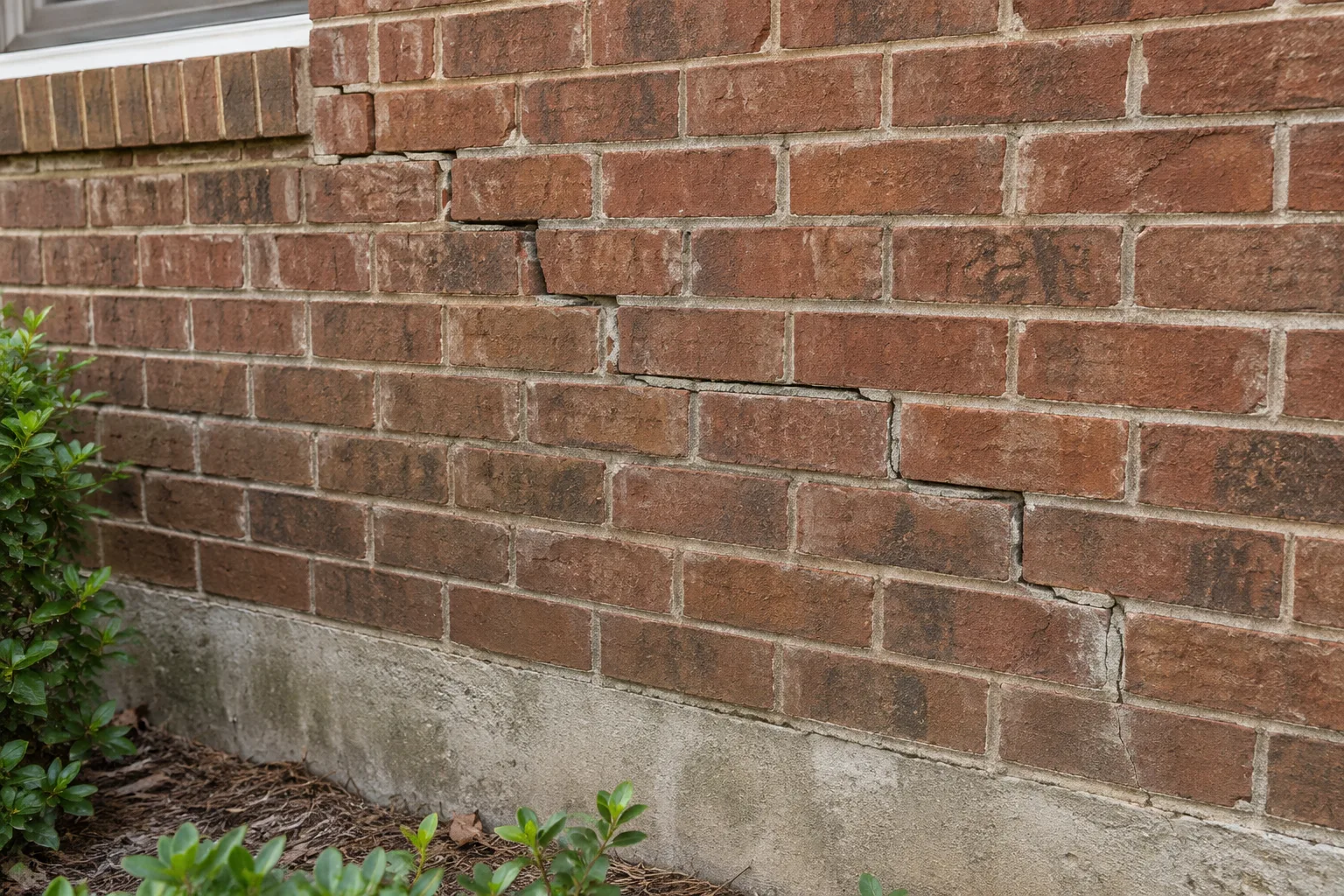
Is a cracked foundation always an emergency?
A crack is not automatically an emergency, and a remote article cannot declare a home safe to monitor. Visible bowing, displacement, sudden change, active water entry, rapidly widening conditions or other immediate hazards warrant keeping clear and seeking appropriate emergency or professional help. Other cracks still deserve documentation and qualified site assessment when concern persists.
Cracks can relate to curing, finish movement, masonry, moisture, support or other conditions. Pattern, width, direction and change over time help organize questions but do not diagnose the property.
If there is an immediate hazard, keep people away from the area and contact appropriate emergency or professional help; a referral form is not dispatch. For non-emergency concerns, request a qualified site assessment rather than relying on a remote safe-monitoring verdict.
Which observations warrant prompt review?
Several observations deserve prompt review: a horizontal or displaced crack, visible wall bowing or leaning, a sudden change, a crack accompanied by water entry, or multiple movement signs together. Width thresholds can help document change, but no single measurement diagnoses urgency; ask a qualified professional to review the evidence.
These observations can warrant qualified review, but none establishes a structural diagnosis remotely:
Horizontal cracks can indicate lateral pressure and deserve prompt evaluation, especially with wall displacement, seepage, or a visible bow. A contractor should measure the wall and explain urgency rather than treating a pattern as a complete diagnosis.
Stair-step cracks in brick or block deserve more attention when paired with sticking openings, sloping floors, displacement, or water entry. Regional soil maps provide context only; fill, drainage, grading, foundation type, and settlement history vary by lot. Request measurements rather than attributing a pattern to one soil type.
- Horizontal or displaced crack — seek prompt qualified review
- Wall bowing or leaning — keep clear if safety is uncertain
- Sudden or rapidly changing condition — document if safe and seek prompt help
- Stair-step cracking with other movement observations — request assessment
- Active water entry or contamination — address safety and the observed water path
- Any collapse risk or immediate hazard — leave the area and contact appropriate emergency help
Which observations may support documentation while awaiting advice?
Some cracks may be documented while arranging qualified advice when there is no visible displacement, active water entry, bowing or other safety concern, but this guide cannot declare a property safe to monitor. Photograph with a date and scale if safe, avoid entering hazardous areas and ask what interval and limits apply.
A narrow or vertical crack can have several possible causes. Do not use a fixed width, dryness or single photograph as a safety determination; document change and seek review when concern persists.
A baseline professional inspection may be useful if available. Confirm fee, scope, schedule and availability directly; an introduction is not guaranteed.
How can seasonal observations be used when documenting foundation cracks?
Seasonal changes in moisture, drainage, temperature, construction, and foundation type can affect when cracks are noticed. Mapped Piedmont soil information is regional context, not a diagnosis. Compare dated observations and site evidence before identifying a cause.
The USDA Official Series Description for Cecil classifies mapped Cecil soils as low shrink-swell. That regional map is not a diagnosis: fill, drainage, grading, foundation type, and settlement history vary by lot. Seasonal observations should be paired with crack measurements and other evidence.
Homes near Sandy Plains Road and Acworth can have different clay, saprolite, fill, drainage, and foundation conditions even within the same ZIP code. A diagonal crack at a door corner may reflect movement, framing, finish work, or another condition; request site-specific observations.
If a crack changes with seasons, that pattern may be relevant, but it does not by itself establish a soil cycle or distinguish an emergency. Document width, displacement, water entry, and companion signs and request qualified review when changes are visible.
What is the real cost of waiting to fix a foundation crack?
A crack may remain stable or change, and future scope or cost cannot be predicted from timing alone. Document it and seek appropriate advice for worsening, water entry or safety concerns. Published prices are planning examples, not a forecast that delaying will cause a larger repair.
Moisture, temperature and movement may affect some cracks, but progression is not inevitable or tied to a fixed number of seasons. The crack-repair guide explains questions about condition and purpose of treatment.
Age and original code compliance do not establish a present defect or predict deterioration. Review actual observations, prior work and any relevant construction records.
See the warning-sign guide for documentation questions. Immediate hazards need appropriate emergency attention; other decisions should follow property-specific advice rather than a sales deadline.
What should I do right now if I just found a foundation crack?
Document the crack with a dated photograph and scale, note water entry or displacement, and check nearby drainage without making a diagnosis. Promptly seek qualified review for bowing, displacement, rapid change, active water entry, or multiple movement signs. Do not make structural changes based only on an article.
Photograph a crack from a safe location with a date and scale, and note water entry, displacement or nearby changes. Do not enter a hazardous crawlspace or make structural changes based only on an article.
Gutters, downspouts and grade can be relevant observations, but do not regrade, excavate or redirect water in a way that creates a new hazard or changes site conditions without appropriate advice.
For horizontal cracks, bowing, sudden change, active water entry or other red flags, keep clear and seek prompt qualified or emergency help as appropriate. The types of foundation cracks guide provides observation questions, not a remote safety verdict.
How does your referral service work and what does it cost me?
Marietta Foundation Repair is a disclosed referral service operated by <strong>Stratum Relay LLC</strong>, not a contractor. If a suitable contractor is available, we may introduce you; availability and credentials are not guaranteed. Verify identity, license, insurance, assessment fee, scope, schedule, price, and warranty directly. The referral request has no fee from this service; if an introduction is arranged under a referral agreement, the contractor may compensate us.
When you call (678) 329-9460 or submit a request, we may check whether a suitable contractor is available. We do not promise one contractor, an assessment, or a schedule. If an introduction is arranged, the contractor contacts you directly and you decide whether to proceed.
If an introduction is available, ask the contractor whether an assessment fee applies and request any observations or written scope directly. You pay only under the contractor’s written terms for authorized work; this service does not supervise or issue a warranty.
For more background on evaluating any foundation contractor — including what licenses to verify and what a written warranty should include — see how to vet a foundation contractor in Cobb County. Related guide: learn more.
Frequently asked questions
Can I drive on my driveway or park near the house if I found a foundation crack?
Do not infer safe loading from a photograph or article. If a wall is visibly bowing or displaced, keep clear and seek qualified advice; if there is an immediate hazard, contact appropriate emergency help. For other conditions, ask a professional about site-specific safety.
Do stair-step cracks in brick always mean the foundation is failing?
No. A stair-step pattern may be relevant to settlement or masonry behavior, but does not establish a cause by itself. Document width, offset and changes, including any door or floor changes, and ask an appropriate professional what evidence supports the explanation. Do not infer active foundation movement solely from a combination of symptoms.
Is a crack that appeared suddenly after a drought more serious than one that grew slowly?
A sudden crack deserves prompt documentation and review, but the cause cannot be assigned to drought or a particular soil without site evidence. Photograph width, displacement, water entry, and nearby conditions; seek qualified advice sooner when the change is rapid or accompanied by movement signs.
Will homeowner's insurance cover foundation crack repair in Georgia?
Coverage depends on the policy, covered event, exclusions and documented cause. Do not infer coverage from crack width, drought or a soil label; ask the insurer or claims professional about the actual loss.
How wide does a crack have to be before it is considered serious?
No universal width classifies a crack as serious or safe. Width, direction, displacement, change, moisture and surrounding conditions should be considered together; document safely and seek qualified review when concerned.
Do you charge for the foundation inspection, and are there any strings attached?
This service does not charge to submit a referral request. If a suitable contractor is available, an introduction may be arranged; confirm any assessment fee, scope, schedule, and availability directly. There is no obligation to hire.