Helical & Push Pier Cost in Marietta, GA: Planning Context
Need help with your own home?
Tell us your concern. We'll check local contractor availability.
No referral fee · No obligation to hire
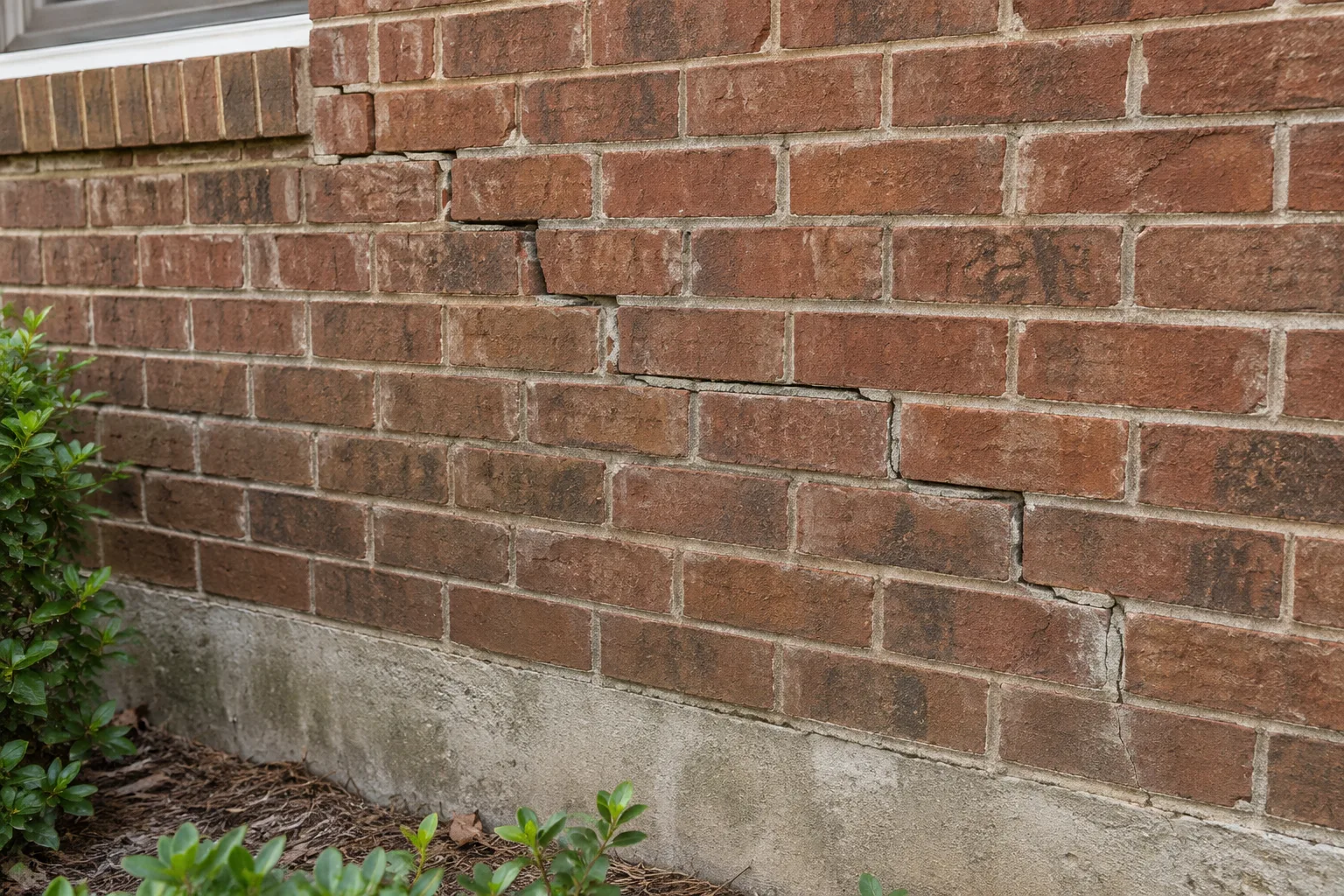
How much do helical piers cost per pier in Marietta and Cobb County?
Published helical and push-pier ranges of roughly $1,400 to $3,500 per pier are budgeting context only, not verified Cobb County price data or a quote. Count, depth, access, foundation type, design, and measured movement affect the scope. Confirm any assessment fee, written scope, and price directly with the contractor.
Pier projects are often priced per pier, but count and cost depend on the design, access, foundation, and installation criterion. Helical shafts are advanced by rotary torque to a specified criterion; push piers are driven using structural reaction force. A depth estimate must come from the property, not a regional soil label. The USDA Official Series Description for Cecil classifies mapped Cecil soils as low shrink-swell. That regional map is not a diagnosis; fill, drainage, grading, foundation type, and settlement history vary by lot.
If an introduction is available, ask the contractor to explain the measurements, design criterion, pier count, estimated depth, and load-transfer plan before quoting. A general reference to IRC Section R401 does not replace site-specific evidence. See how helical piers work for the method overview.
How should pier count be determined for a Cobb County home?
A town name, symptom or generic house type cannot establish the pier count. It should follow a supported design considering loads, footing geometry, bearing conditions, access and installation criteria.
Pier count should follow crack mapping, floor-elevation measurements, footing condition, load, design, and access. If an introduction is available, ask the contractor to explain the evidence and alternatives; regional ZIP or symptom patterns cannot establish a count.
Quantity is one cost factor alongside design, depth, access, materials and related work. The static cost-planning guide offers planning questions, not a count or quote for your home.
- Ask what loads and foundation geometry the proposal uses.
- Ask how proposed pier locations were selected.
- Ask what investigation supports the bearing and installation criteria.
- Confirm whether design and a written proposal are offered, and their fees.
What factors make helical pier costs higher or lower in my area?
Depth to the design criterion, pier count, access, foundation type, load, and proposed load path can change a helical or push-pier budget. Soil and bearing conditions vary by lot; do not assume a 20- or 30-foot depth or a stable layer from neighborhood context. These figures are rough budgeting context, not verified Cobb County price data or a quote.
Subsurface materials and bearing conditions vary by property. A road, ZIP code or proximity to a mountain does not establish rock depth, pier depth or price.
Ask what investigation supports the design and how access, utilities, obstructions, quantities and unforeseen conditions affect cost. The static cost-planning guide provides planning questions, not a subsurface estimate.
- Proposed bearing conditions and installation criteria: require site-specific support, not a county-wide depth assumption
- Pier diameter: standard vs. heavy-duty load-rated shaft
- Equipment access: open yard vs. tight side passages or interior work
- Site-specific subsurface conditions and investigation requirements
- Number of corners or load points that need support
What is the difference between helical pier cost and push pier cost?
Helical shafts use helix plates and are advanced by rotary torque; push piers are driven axially using structural reaction force. Both may fall within a similar rough budgeting range, but price and suitability depend on design, access, load, and measured conditions. These figures are rough budgeting context, not verified Cobb County price data or a contractor quote.
A contractor may discuss helical piers where rotary installation suits access or load conditions, while push piers may suit a footing that can provide the required reaction force. Neither method is selected from cost alone; ask for the evidence, design criterion, alternatives, and limitations.
The helical piers vs. push piers comparison page covers the technical trade-offs in detail. For cost purposes, assume the same per-pier range applies to both methods and focus your budget planning on pier count and depth rather than method selection.
Are piers worth the cost compared to cheaper foundation fixes in Marietta?
Piers, crack treatment and slab work have different purposes. Active movement does not automatically select deep support. Ask what investigation and design justify the method, what alternatives exist and what limitations remain.
A crack repair can seal a suitable opening but may not address ongoing footing movement. Ask whether measurements show active settlement, whether drainage or monitoring is reasonable, and which method addresses the observed condition.
A proposed method should address the observed condition and supported design assumptions. See slab repair and the static cost-planning guide for questions; neither this guide nor a visit guarantees a diagnosis or proposal.
What should I ask about an assessment and pier proposal?
An available contractor may measure floor elevations, map cracks, and discuss a proposed pier count and depth. Confirm assessment fees, timing, and scope directly before scheduling, then request an itemized written estimate before work begins.
We are not a contractor. If an introduction is available, a contractor may assess homes in the service area and provide written terms. Verify identity, license, insurance, assessment fee, and scope directly. The referral request has no fee from this service.
Ask whether a proposal will identify the method, design basis, quantities, estimated depths, exclusions and pricing, including how unforeseen conditions are handled. The assessment guide helps you prepare questions. Calling (678) 329-9460 requests a referral; it does not schedule a visit or guarantee a quote.
What site factors can affect overall foundation-repair cost in Cobb County?
Cobb County's Piedmont geology — mapped soil units and site conditions vary across Cobb County. A regional map cannot determine whether deeper support or another method fits; measurements and design evidence should guide the scope.
Metro Atlanta receives substantial seasonal rainfall, but soil and site response vary. Drainage, fill, roots, foundation type, and construction history can influence movement; ask for measurements and evidence rather than relying on a regional percentage or timeline.
Long-term performance depends on design, installation, site conditions, and written warranty terms. Ask the contractor to state the supported load, movement target, exclusions, monitoring, and warranty rather than relying on a general promise. See why foundations crack in Cobb County and foundation repair options.
Frequently asked questions
Can I get a per-pier price over the phone without an inspection?
Published per-pier ranges are rough budgeting context only, not verified Cobb County price data or a quote. A property assessment is needed to discuss floor elevations, pier count, depth, and an itemized scope.
Does homeowners insurance cover helical or push pier installation in Georgia?
Coverage depends on the policy, exclusions, and documented cause. Gradual settlement may be excluded, while a sudden covered event may be treated differently. Confirm with your insurer; an inspection does not guarantee coverage.
How long does a helical or push pier installation take on a typical Marietta home?
Installation timing varies with pier count, access, foundation type, and scope. A contractor should confirm the schedule directly after reviewing the property; do not rely on a typical one-day promise.
What is the disclosed-referral model and does it cost me anything?
We are not a contractor. If an introduction is available, verify identity, license, insurance, assessment fee, scope, and schedule directly. The referral request has no fee from this service; if an introduction is arranged under a referral agreement, the contractor may compensate this service.
Do helical piers raise a settled foundation back to level?
Partial lifting may be proposed where the structure and design support it, but stabilization without a full return to level may be the appropriate target. Ask the contractor to state the lift target, evidence, risks, and what remains outside the scope.
What are the warning signs that my Cobb County home needs piers rather than a simpler fix?
Symptoms do not select piers or crack treatment. Ask what measurements, investigation and design support the proposed method and which alternatives were considered. Confirm assessment availability, fees, scope and limitations directly; a visit does not guarantee a diagnostic conclusion.