Foundation Crack Repair Cost in Marietta, GA
Need help with your own home?
Tell us your concern. We'll check local contractor availability.
No referral fee · No obligation to hire
How much does foundation crack repair cost in Marietta?
Crack-treatment cost depends on the supported scope, product, quantities, access and terms. Published figures are planning examples, not verified local prices. Confirm assessment fees and any proposal directly; a visit does not guarantee that the cause will be determined.
Crack appearance can organize questions but cannot select a method by itself. Ask what observations and investigation support the proposed treatment. The assessment guide explains scope and fee questions.
A crack may remain stable or change for several reasons. Document changes without assuming seasonal soil movement or inevitable widening.
What affects the price — what makes crack repair more or less expensive?
Product requirements, crack condition, quantities, access, preparation and related work can affect cost. Ask what evidence supports the proposed method and obtain an itemized scope if offered; appearance alone does not establish the cause or price.
Port spacing, preparation and material quantities depend on the selected product and supported scope. Ask for the manufacturer's requirements rather than relying on a universal spacing rule.
Interior vs. exterior access: injection from inside a basement or crawlspace may be simpler. Exterior repair can require excavation, membrane work, or hydraulic cement, adding labor and equipment cost; if drainage work is also needed, the scope may move into basement waterproofing territory. These figures are rough budgeting context, not verified Cobb County price data or a contractor quote.
Crack count: the number of cracks may affect proposed quantities, but count or pattern alone cannot establish cause, structural significance, suitable treatment, or price. Ask what site evidence supports each part of a proposed scope.
- Crack length (more ports = higher material cost)
- Number of cracks being addressed in one visit
- Method — epoxy vs. polyurethane (see next section)
- Interior injection vs. exterior excavation and membrane
- Active water infiltration vs. dry shrinkage crack
- Whether underlying settlement requires a separate structural repair
Does epoxy cost more than polyurethane foam for crack injection?
Epoxy and polyurethane systems have different products, preparation, installation requirements, and intended uses. Published price differences are rough planning context only, not a universal rule or verified Cobb County price data. Ask what crack condition, movement, water path, substrate, manufacturer specification, and design support the selected product; neither material is universally better.
Epoxy injection may be discussed where a product specification and measured condition support bonding; ask what preparation, movement limits, and design basis apply. Any price position within the $300–$3,000 range is rough budgeting context, not verified Cobb County price data or a contractor quote.
Polyurethane foam may be discussed for some water-infiltrating or movement-sensitive conditions when the product specification supports it. Ask how movement, water path, preparation, substrate, and limitations affect the proposal; do not infer the correct product from moisture or appearance alone. These figures are rough budgeting context, not verified Cobb County price data or a contractor quote.
If an introduction is available, ask the contractor to explain why epoxy, polyurethane, reinforcement, drainage, or another scope fits the observed crack. Choosing a method without understanding movement and water can leave the underlying condition unresolved.
How should crack sealing be compared with structural movement?
Sealing a crack without addressing ongoing movement may be temporary, but injection alone does not establish the cause. If measurements show footing movement, a contractor may discuss deep support or drainage alongside crack repair; the written scope should explain why.
A $300–$500 crack seal is not the same as a $300–$500 foundation repair. A crack may reopen when movement or water continues, but the cause must be established with site evidence rather than inferred from a regional soil label. These figures are rough budgeting context, not verified Cobb County price data or a contractor quote.
If measurements show footing movement, a contractor may discuss helical or push piers, drainage, or another scope. Pier count and pricing depend on the affected footing, access, design, and evidence; see the helical piers page. These figures are rough budgeting context, not verified Cobb County price data or a contractor quote.
Crack sealing may address a suitable crack or water path, while structural movement may require separate investigation, monitoring, drainage, reinforcement, or deep support. Ask what measurements, product requirements, design basis, alternatives, and limitations support any combined or separate scope; no fixed sequence or outcome is guaranteed.
How much do horizontal cracks or bowing basement walls cost to repair?
Horizontal cracks or bowing in a block or poured-concrete basement wall can indicate lateral pressure, but the cause and urgency depend on wall type, deflection, water, drainage, and site evidence. Carbon-fiber straps or other systems may be discussed for a measured condition. These figures are rough budgeting context, not verified Cobb County price data or a contractor quote.
A horizontal crack at or below grade warrants prompt attention because lateral soil or water pressure is one possible cause. Conditions vary by basement, drainage, fill, wall construction, and site. Ask for measurements and a written explanation rather than assuming saturated soil or a particular repair.
Carbon-fiber straps may be discussed for a measured bowing-wall condition. Strap count, wall length, deflection, access, drainage, and design affect cost. Published ranges are rough budgeting context, not verified Cobb County price data or a quote; a contractor confirms the written scope.
Crack treatment and wall stabilization can be separate or related scopes depending on measured movement, water, wall condition, product requirements, and design. A provider may discuss injection, reinforcement, drainage, or another sequence, but no categorical order or outcome is guaranteed; ask for the written basis and limitations.
Does a cracked foundation affect a home inspection or insurance in Georgia?
Foundation cracks may appear in home inspections and affect sale or insurance questions, but outcomes depend on the documented cause, policy, and transaction. Georgia policies may distinguish sudden covered events from gradual soil movement. Review your policy and obtain site evidence; do not infer coverage or cost from a regional soil label.
Dated observations, assessment findings, and estimates may help transaction participants evaluate a property's history. They do not establish disclosure compliance, insurability, sale outcome, or value. The foundation crack found on home inspection guide outlines questions to discuss with the relevant professionals.
Document when the crack was noticed and any relevant events. Timing alone does not prove a cause or coverage; review your policy and ask the insurer how it applies to the documented facts.
What should I confirm about a crack-repair assessment?
Any contractor assessment fee and terms are confirmed directly; there is no obligation to hire. If an introduction is available, a contractor may measure cracks, review settlement and water signs, and provide a written scope. We are not a contractor. The referral request has no fee from this service.
During any agreed assessment, ask the contractor to distinguish shrinkage, settlement, hydrostatic, and other crack patterns using observations and measurements. Different findings can lead to different recommendations and prices, including scopes outside the $300–$3,000 crack-injection range. These figures are rough budgeting context, not verified Cobb County price data or a contractor quote.
The referral model is straightforward: we do not screen or guarantee contractors. If an introduction is available, verify the contractor’s identity, license, insurance, assessment fee, and scope directly. The referral request has no fee from this service. Use the foundation assessment page to request an introduction if available.
Ask about assessment fees and whether a written proposal is available before agreeing to a visit. If one is provided, compare its scope, exclusions, fees and authorization terms before proceeding. Related guide: bowing-wall concerns.
Frequently asked questions
Can I seal a foundation crack myself with hydraulic cement or epoxy from a hardware store?
DIY fillers may temporarily reduce surface water, but a professional should review a crack that is widening, leaking, displaced, or paired with other symptoms. The right repair depends on crack type, moisture, movement, and foundation details.
How long does crack injection take and how soon can the repair get wet?
Timing varies with crack count, preparation, access, method, and cure requirements. Ask the contractor to confirm the schedule and any return visit directly; do not rely on a typical duration.
Will crack injection stop water from coming into my basement?
Polyurethane may help seal a water-infiltrating crack, but it does not guarantee that every water path is resolved. Multiple cracks, the floor-wall joint, porous block, drainage, or wall movement may require a different scope. These figures are rough budgeting context, not verified Cobb County price data or a contractor quote.
Does crack repair come with a warranty?
Warranty terms vary by method, contractor, and observed condition. Ask for the written coverage, exclusions, movement limits, and whether structural work is required before authorizing anything.
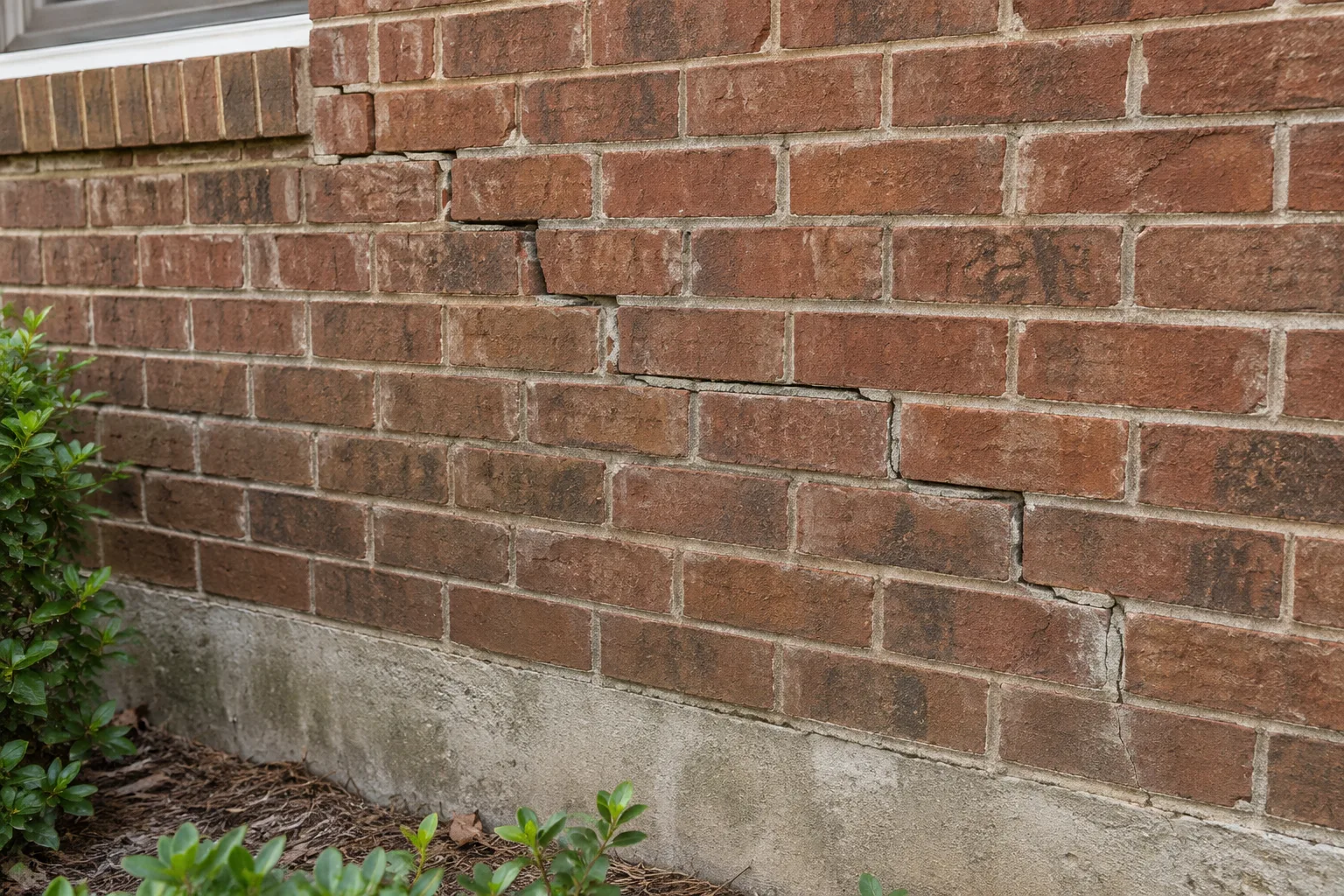
My Marietta home has stair-step cracks in the brick exterior — is that the same repair?
A stair-step crack can reflect differential movement, but it does not establish that piers or injection are needed. Ask for measurements, drainage and fill review, alternatives, and evidence before accepting a structural scope.
How is the referral fee structured — does it affect what I pay for repairs?
This service does not set contractor fees or repair prices. If an introduction is arranged under a referral agreement, the contractor may compensate this service; that does not establish whether contractor pricing changes. Confirm the contractor’s itemized scope, price, and payment terms directly.